Let us be honest — Earth Day celebrations have sometimes felt like a feel-good tradition. A few tree plantings here, a few speeches there, then we all move on. But this year, something was different.
A few days ago, I stepped outside just before noon and felt the weight of the sun pressing down like never before. Not just heat, “scorching intensity.” It is the kind of heat that quiets entire neighborhoods. Shade becomes sacred. Fans run all day. And still, the sweat keeps rolling.
This is not just the dry season or a “hot spell.” It is a sign. A symptom.
From record-breaking heatwaves in Asia to devastating floods in Kenya and crop failures in northern Nigeria, nature is screaming. We cannot pretend anymore. Climate change is not a distant threat. It is here. It is personal. And for many, it is dangerous.
We are now past the stage of awareness. The warnings have come. The pledges have been made. Yet global emissions continue to rise, and adaptation funding for Africa remains critically low, less than 12% of the global climate finance flow, according to the UN Environment Programme.
Policies are stuck in endless approvals, promises everywhere, yet results do not show. Communities are adapting on their own, but without support. The problem? We have treated climate change like someone else’s problem. A topic for conferences. A government affair. An issue for tomorrow.
So here we are, Earth Day 2025, standing not at a crossroads, but at a climate tipping point.
What If We Actually Turned Things Around?
Now, imagine something different.
Imagine Nigeria running on clean, abundant solar power, not in pilot communities, but across states. Imagine farmers who no longer fear unpredictable rainfall because they now work with weather-smart tools, and where every school teaches climate awareness just like math or science. Where people know their rights and their power to demand a healthy environment. Picture the youth leading recycling revolutions, eco-enterprises springing from innovation hubs in Abuja, Enugu, and Sokoto.
Picture an Africa that does not wait for climate finance but leads with its own ideas, voices, and power. An Africa where community solutions are not side projects but mainstream policy. Imagine green jobs becoming the norm, not the exception. I
It is possible.
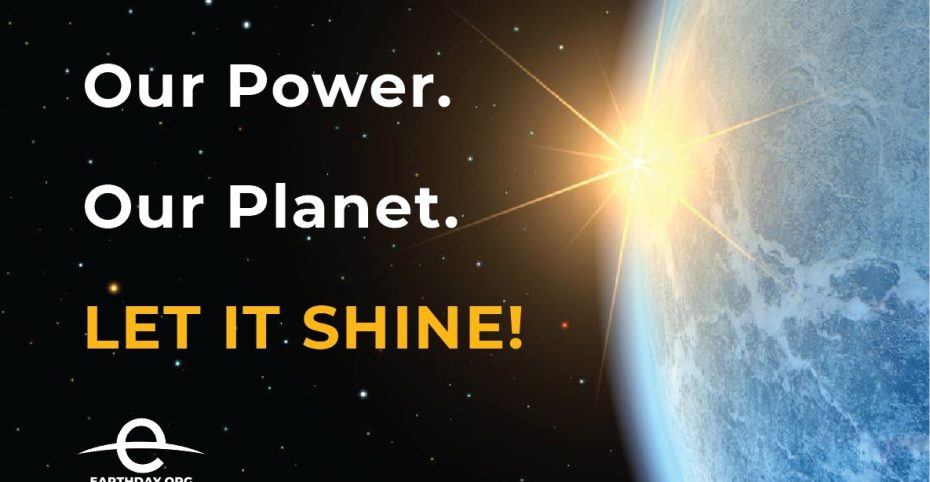
That is the world Earth Day 2025 asked us to believe in. That is the vision behind this year’s theme: “Our Power, Our Planet.” It is not just a slogan. It is a reminder. That change begins with us. That power is not only held by leaders; it is in our voices, our actions, and our decisions. We are not helpless. We are powerful.
How Do We Get There?
So, how do we move from heatwaves and helplessness to hope and healing?
We start by using our power.
We begin by remembering that climate action does not belong to politicians or scientists alone. It belongs to you. To me. To us.
We hold the power in our daily choices, our community actions, and our collective voices. That power looks like:
- Our voices: Speak up when you see injustice. Educate those around you. Share stories from your community. Put pressure on leaders to act.
- Our actions: Support climate education. Reduce waste. Plant trees. Choose clean energy when you can. Help your neighbors understand climate risks.
- Our platforms: Use social media not just for entertainment but for advocacy. Celebrate local solutions. Highlight the efforts of climate champions in your area.
- And yes, demanding that climate justice include Africa, not just in speeches, but in funding, inclusion, and collaboration.
Earth Day 2025 should not just be a day we wear green shirts and plant trees (as important as that is). It should be a turning point in how we talk, teach, fund, and fight for the future we deserve.
Because the future is not waiting for us, it is arriving fast.
So, what future are we really creating?
The answer lies in what the planet can survive and what we are willing to change. And the good news? The power to change is already in our hands.
Our power is real. And our planet? It is not waiting. It is responding to what we do and what we ignore.
It is time we use it to protect our planet.
Let this Earth Day be a beginning, not a memory.